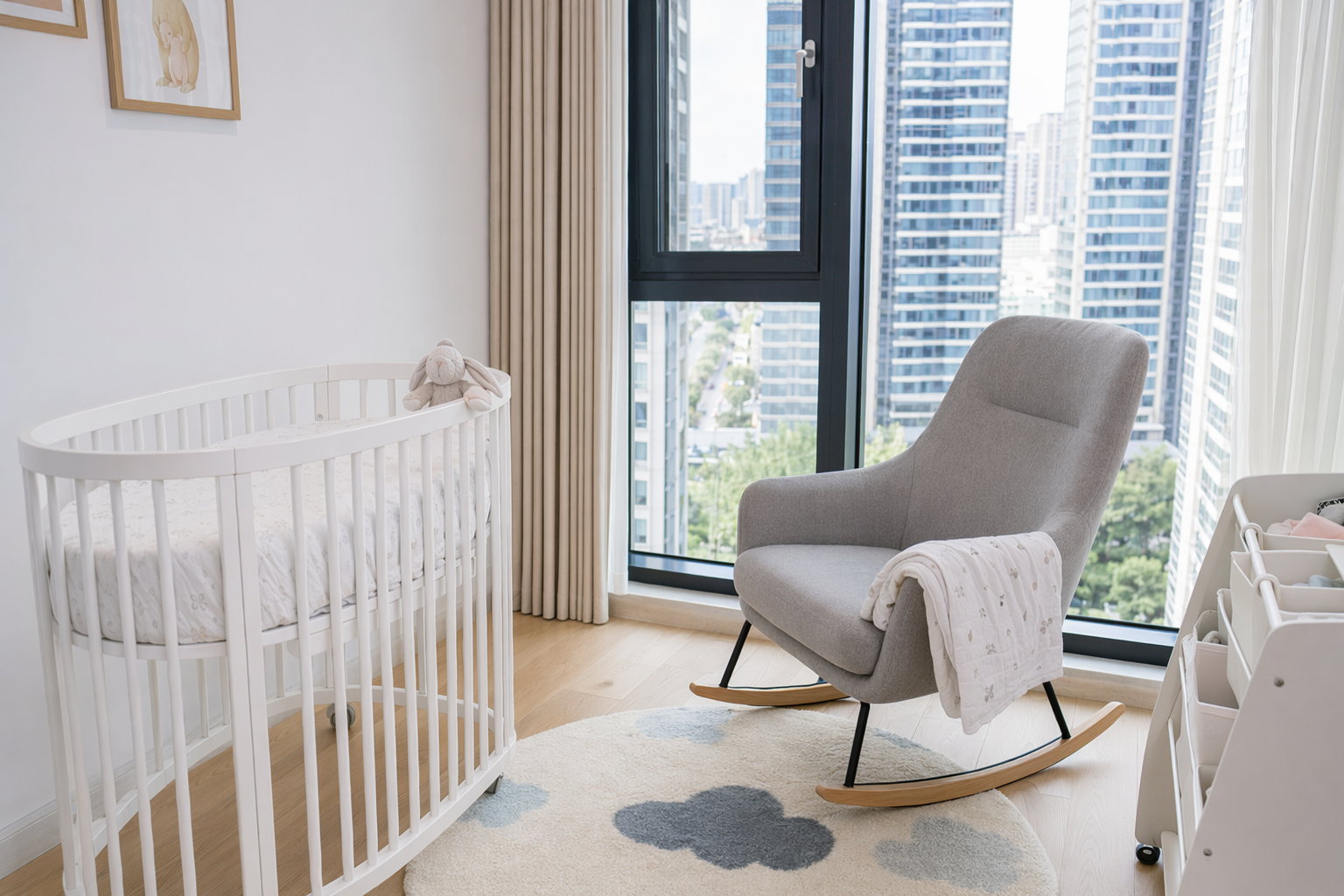
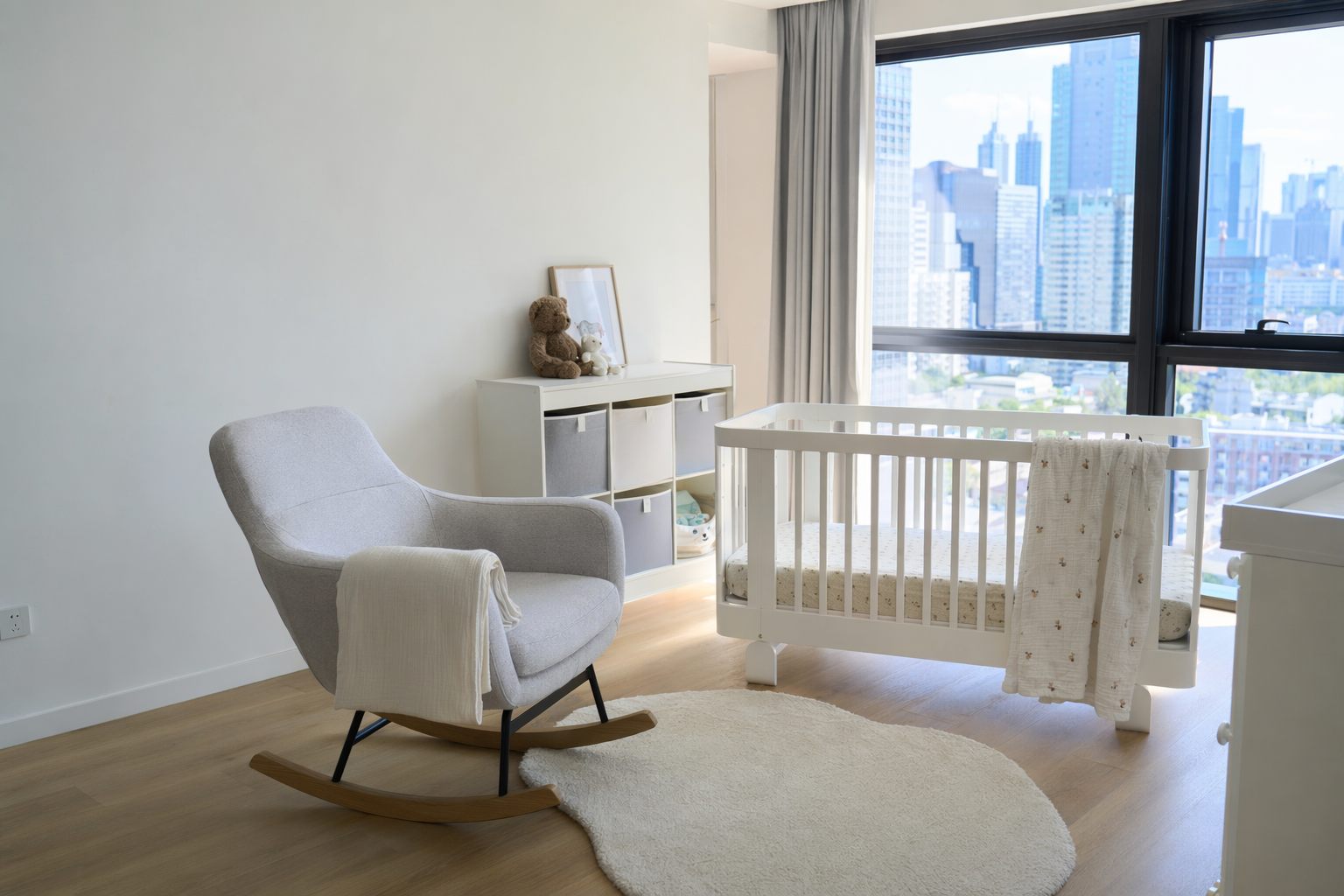
This isn't a customer story. We don't publish customer stories. This is a synthesis of how a thoughtful first-baby expat family in Shanghai would structure the 90-day handoff from a yuesao to an ongoing ayi, drawn from interviews with five first-baby expat families and two yuesao-specialist agencies. Names, neighborhoods, and individual scheduling details are illustrative. The structure, salary numbers, overlap framework, and recruitment timing are real.
The family we're working from: two professionals, first baby, due date known 30 weeks in advance, both parents working with ~3 months combined parental leave between them, living in a Jing'an 3-bedroom apartment with a small staff bedroom. Plan: 30-day gold-tier live-in yuesao, then a 7-day overlap, then the ongoing live-out ayi who continues through month 12+. Budget for the 90-day window: USD 8,000–12,000 total.
The setup
The postnatal window in a first-baby expat family is structurally different from any ongoing placement. The yuesao role is 28–42 days of intensive postnatal care — 24-hour newborn coverage plus mother-recovery support including the traditional 'sitting the month' (坐月子) framework that many Mandarin-speaking yuesao bring as their default. The ongoing ayi role is 8–10 hours/day, focused on toddler-track childcare and household support. The two roles overlap in about 40% of their content but differ in 60%.
The transition between them is where families typically lose continuity. A poorly-structured handoff means the new ayi inherits a 30-day-old infant with no familiarity, no routine handover, no relationship with the family, and a sleep-deprived mother trying to brief her on three subjects at once. A well-structured handoff means the new ayi arrives in the household 7 days before the yuesao leaves, learns the routine directly, and starts solo with full continuity.
The brief for the yuesao role (sent at week 30 of pregnancy via a partner agency): 'Gold-tier (金牌) yuesao, 5+ postnatal placements completed, MHRSS 母婴护理师 中级 certificate or higher (verified), comfortable with Western expat-family dietary norms, willing to brief incoming ayi on routine in the final 7 days.' Salary band: ¥ 25,000–32,000 for the 30-day window.
The brief for the ongoing ayi (sent in parallel at week 30 of pregnancy, with start date set +7 days before yuesao end): 'Mandarin-native, functional English, 3+ years infant-and-toddler experience, comfortable taking handoff from yuesao, available for live-out 5+1 days/week, willing to do month-2-through-12+ continuity.' Salary band: ¥ 8,500–10,500/month live-out.
The build
The pregnancy-side timeline (weeks 30–40):
- Week
30: brief both roles to the agency in parallel. Yuesao first because the candidate pool is narrower. - Week
32–34: yuesao shortlist of3–4candidates. Family interviews2. Selects one. Contract signed (deposit¥ 2,000typical). - Week
34–36: ayi shortlist. Family interviews3. Selects one. Contract signed contingent on the start date. - Week
36–40: confirm both roles. The yuesao is on standby with a2-week notice from birth.
The postnatal window:
- Day
0–2: family discharges from hospital. Yuesao arrives at home within12hours of discharge. - Days
1–28: yuesao does24-hour live-in. Schedule typically: nights with the infant (feedings every2–3hours), morning mother-recovery cooking and care, daytime infant care during mother's rest windows, evening family integration. Strict adherence to whatever 'sitting the month' framework the family has agreed (most families negotiate a relaxed version — no full bath restriction, modified diet, more outdoor time). - Day
21: family contacts the ongoing ayi to confirm her start date is firm (day 23). - Day
23(start of7-day overlap): ongoing ayi begins. She shadows the yuesao for the first2days — observing the routine, the feeding rhythm, the bath process, the soothing techniques, the family's preferences. - Day
25–27: ongoing ayi increasingly takes the lead with yuesao backup. Yuesao observes and gives feedback. - Day
28–29: ongoing ayi runs the daytime routine solo with yuesao on standby. Yuesao still does nights. - Day
30: yuesao final day. Family farewell, photo, small gift. Yuesao departs. - Day
31onward: ongoing ayi runs daytime routine. Nights become mother-and-father responsibility (or, if budget allows, a night-nurse for an additional30days).
The handoff documentation: the yuesao writes a 2-page handoff one-pager on day 23 covering: feeding rhythm, sleep windows, bath process, soothing techniques, parent preferences. The ongoing ayi reads and discusses with both yuesao and mother on day 24. The document stays in the home as reference for the new ayi.
Calibration in month 2: the family does a 15-minute Sunday check-in for the first 4 weeks of the ongoing ayi solo. The routine continues to evolve as the infant grows; the check-ins surface what's changing.
The economics
90-day all-in cost calculation:
- Yuesao salary (
30-day live-in at gold tier):¥ 28,000 - Yuesao agency fee:
¥ 4,000 - Yuesao deposit / commitment fee:
¥ 2,000(often refunded against final salary) - Ongoing ayi
7-day overlap salary (proportional):¥ 2,400 - Ongoing ayi month-
2salary:¥ 9,500 - Ongoing ayi month-
3salary:¥ 9,500 - Ongoing ayi
13th-month bonus accrual:¥ 1,600(annualized to the60-day window) - Ongoing ayi agency fee:
¥ 6,000 - Postnatal food and household provisions (incremental, mostly weeks
1–4):¥ 6,500 - Newborn supplies (diapers, formula if used, baby items): excluded — separate baby budget
- Mother-recovery cooking ingredients (specifically the traditional 'sitting the month' diet, week
1–4):¥ 3,200
90-day total: approximately ¥ 72,700 ≈ USD 10,100 ≈ averaging USD 3,370/month across the 90 days — though the cost is heavily front-loaded into the first month (~50% of total spend in the first 30 days).
Ongoing run-rate from month 4: the ongoing ayi continues at ¥ 9,500/month salary, plus bonuses and benefits totaling roughly ¥ 12,000–13,000/month all-in. The yuesao premium is a one-time investment in the postnatal window, not a recurring cost.
Optional add-on: night-nurse continuation in month 2. Some families extend night coverage with a separate night-nurse (¥ 12,000–18,000/month) for an additional 30–60 days. This is a budget decision driven by parental sleep tolerance and primary mother's recovery; not standard.
Common pitfalls
Across the five first-baby families in this synthesis, the consistent pitfalls were:
- Booking the yuesao too late. Top-tier yuesao for a given birth window get booked
8–12weeks in advance. Families who waited until week36+typically had a smaller candidate pool and ended up at lower-tier candidates than they would have preferred. - Recruiting the ongoing ayi reactively. Several families said they planned to 'figure out the ongoing ayi after the baby arrived.' By week
4postpartum with a sleep-deprived mother, the recruiting process was significantly harder than it would have been in week34of pregnancy. - Skipping the
7-day overlap. The single most common cost-saving decision and the single most common regret. The7-day overlap pays for itself in month2continuity many times over. - Underestimating the cultural-framework conversation. Many yuesao have strong views on 'sitting the month' framework — diet, cold-air exposure, bath restrictions, visitor norms. Families that didn't have a frank pre-contract conversation about which elements they would and wouldn't follow had friction in the first week. Have the conversation at interview.
- No formal end-of-yuesao reference letter. Most families forgot to write one. A
2-page reference letter for the yuesao is worth15minutes of mother's time on day28and supports the yuesao's next placement; it also closes the relationship well.
What we'd do differently next time
From the synthesis, what families said they'd repeat — and what they'd change:
Would repeat: the parallel-recruitment of both roles at week 30; the 7-day overlap; the 2-page handoff documentation; the Sunday check-ins in month 2; the pre-contract conversation about 'sitting the month' framework adherence.
Would change:
- Start the agency conversation at week
26, not30. Top-tier yuesao for the desired birth window get booked earlier than first-time families realize. - Plan the night-nurse decision before birth. Families that decided about a month-
2night-nurse extension after the baby arrived made the call in a sleep-deprived state. Decide in pregnancy whether the extension is in the budget; if it is, line up the candidate in week36. - Bring the partner into the yuesao interview. Several families had the mother interview alone; afterward the partner had concerns that would have been useful to surface earlier.
- Plan for a
90-day mother-side support beyond the yuesao. Lactation consultant, postnatal mental health check-in, partner's coordinated leave — these aren't placement decisions but they materially affect how the household runs during the yuesao window. - Lock the
7-day overlap into both contracts in advance. Several families found the yuesao wanted to extend (additional fee) or the ongoing ayi wanted to start earlier or later (timing slip). Locking dates into both contracts at signing prevents the renegotiation.
The yuesao-to-ayi handoff is one of the most rewarding 90-day structures in expat-family Shanghai childcare. It is also the one where small planning errors compound into expensive month-2 outcomes. The families who plan it from week 26 of pregnancy onward typically have materially smoother results than the families who plan it from birth onward.
Common questions
Is the 7-day overlap really necessary?
What did the yuesao train the ayi on?
How much did the 90 days cost in this synthesis?
Did the families bring back the yuesao for a second child?
Can the ongoing ayi be hired in advance of the birth?
In plain English:book both roles in parallel at week `30` of pregnancy. The `7`-day overlap is the one thing not to cut. `90`-day total around `USD 10,000`; ongoing run-rate after month `4` is around `USD 1,700/month`. Decide about a month-`2` night-nurse extension before birth, not after.
Want the yuesao-to-ayi handoff templates?
Our 2026 playbook includes the `2`-page handoff documentation template, the `7`-day overlap schedule, and the pre-birth checklist for first-baby expat families.