ShanghaiNanny Concierge placement & advisory
PLACEMENT SERVICE

Full-Time Live-Out Nanny Placement — Shanghai

A nanny who commutes in, covers a predictable 45-hour week, goes home at the end of the day. 2026 band ¥ 7,000–14,000/month plus commute. The most common expat-family placement in Shanghai.

Full-Time Live-Out Nanny Placement — Shanghai
Full-Time Live-Out Nanny Placement — Shanghai — what it looks like

Live-out is the default Shanghai expat-family placement. Roughly 40% of full-time placements we see fit this pattern: a nanny who commutes in on a predictable weekday schedule, typically 07:30 to 18:30 Monday through Friday, then goes home. The family has the household to themselves at night and on weekends. The monthly base salary is ¥ 1,000–3,000/month lower than the equivalent live-in role. The contract is structurally simpler because the room-and-board question doesn't exist. And for families in apartments without an ayi suite — which is most apartments in Former French Concession lane houses and many Jing'an high-rises — live-out is the only realistic full-time structure. This page is the live-out playbook: when it's the right call, what 2026 salary bands actually look like, how the commute reimbursement works, and the contract clauses specific to a daytime-only role.

When live-out is the right fit

Live-out works for the largest share of expat families in Shanghai. Three concrete signals it's your placement:

  • Predictable working hours. Both parents in jobs with 09:00–18:00 schedules and weekends genuinely off. The role covers the workday plus a 30–60 minute buffer at each end.
  • Apartment without a separate room. FFC lane houses, older Jing'an high-rises, central Xintiandi 1–2 bedroom apartments — anywhere the architecture simply doesn't permit a live-in arrangement.
  • Preference for household-empty-at-night. A real preference, not a budget excuse. Some families want the nanny at home all the time; others want the family-only feeling after 18:30. Both are valid.

Live-out does not fit:

  • Non-standard work hours. Finance traders on Asia-Pacific schedules, doctors on call, founders with unpredictable evenings. The commute timing on a 19:30 finish kills both parties — better to go live-in.
  • Multiple young children with bath-and-bedtime overlap. Two children under 4 with a 18:00–19:30 bedtime sequence is hard to deliver if the nanny leaves at 18:30.
  • Weekend coverage needs. Standard live-out is Monday-Friday. Saturday morning cover can be layered via a part-time ayi, but if you need genuinely consistent six-day cover, live-in is structurally cleaner.

Salary bands (live-out vs live-in delta)

Live-out monthly salary in 2026 ranges from ¥ 7,000 for an entry-level Mandarin-only candidate in an outer district to ¥ 14,000+ for an experienced bilingual candidate in Former French Concession.

The live-in vs live-out delta is real but smaller than headline numbers suggest. A live-in candidate at ¥ 14,000/month and a live-out candidate at ¥ 12,000/month look like a ¥ 2,000/month gap. Once you factor in room/board valuation for the live-in (¥ 1,500–3,000/month typical) and the commute reimbursement for the live-out (¥ 500–1,500/month typical), the actual all-in cost difference is often under ¥ 1,000/month.

The real reason to choose live-out is rarely cost. It's the household structure preference and the apartment-fit reality.

Drivers of where you land in the band, in order:

  • Language ability — Mandarin-only baseline; functional English adds ¥ 1,000–2,500/month; true bilingual adds ¥ 2,500–5,000/month.
  • Experience with expat families3+ years carries ¥ 800–1,500/month premium.
  • Neighborhood — FFC +15–20% median; Pudong at or slightly below; Hongqiao/Minhang at median.
  • Number of children — two is the live-out default; three adds ¥ 1,000–2,000/month.

Full worksheet on the salary bands 2026 page.

Salary Band Chart Placeholder

Chart below renders 2026 monthly live-out compensation bands by neighborhood and experience tier.

Commute reality — Shanghai metro and Didi reimbursement

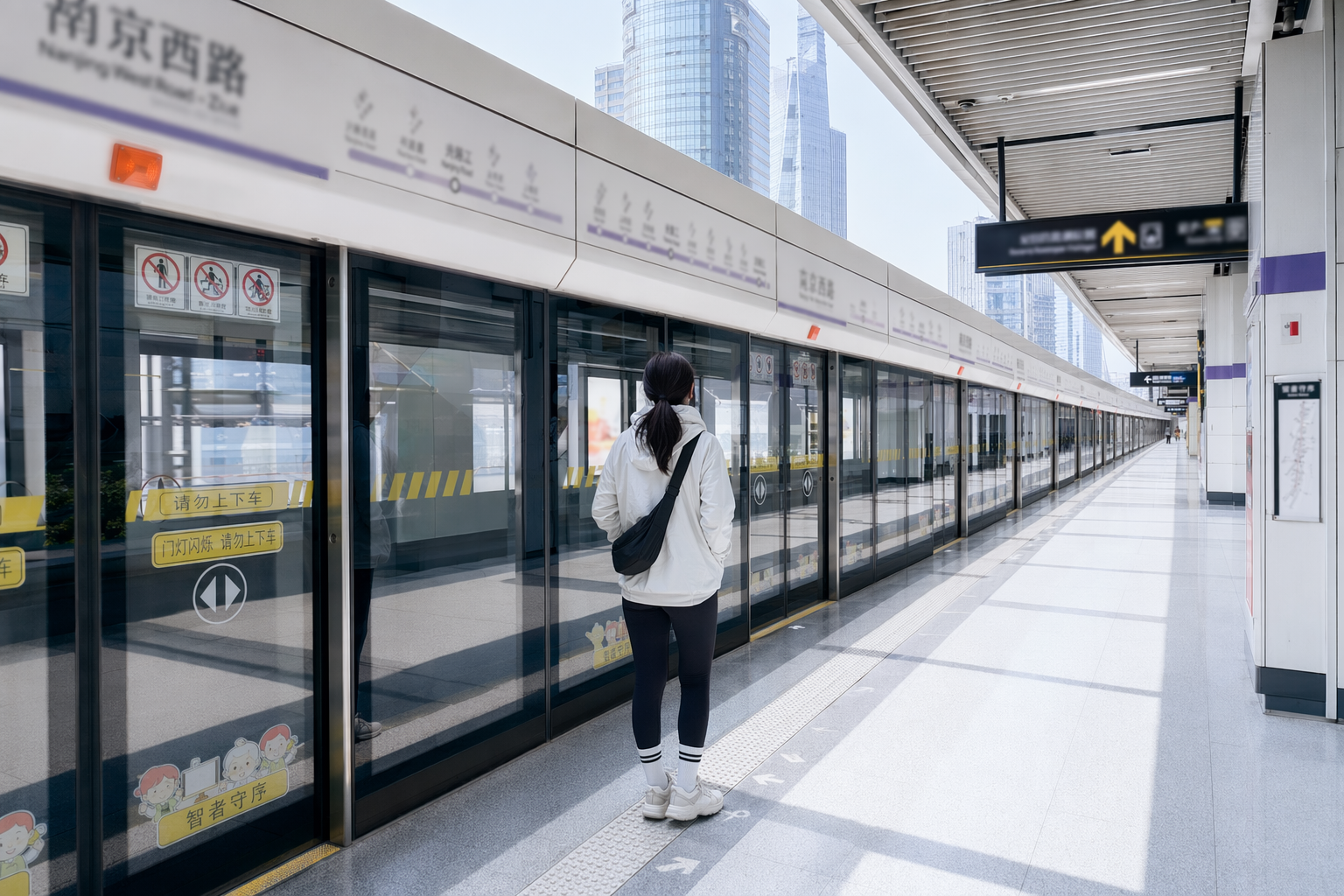
Most live-out nannies in Shanghai commute by metro, often combined with a short walk or e-bike at one end. A representative commute looks like: 45 minutes total, two metro lines, no transfer wait longer than 5 minutes.

Standard reimbursement structure:

  • Metro under 45 minutes one-way — no reimbursement; nanny absorbs the cost (it's part of the all-in salary expectation).
  • Metro 45–75 minutes one-way¥ 500–1,000/month flat commute allowance, paid with monthly salary.
  • Metro over 75 minutes one-way¥ 1,000–1,500/month allowance, plus typically a Didi allowance for late finishes or weather-disruption days.
  • Didi for late finishes — if the nanny stays past 19:30 for evening cover (not standard but occasionally needed), Didi home is reimbursed via Alipay transfer the next morning.

During typhoon season (typically late August through early October) and during heavy rainstorms, families typically cover Didi both ways for the affected days. This is a small annual cost — ¥ 500–1,500/year typical — and it materially improves attendance reliability.

tip

Ask in the second-round interview which metro lines the candidate would use. If the answer involves two transfers or a 70-minute one-way commute, expect attendance reliability to degrade over months 6-12 — that's not a candidate flaw, it's a commute math problem. Adjust the role spec or the reimbursement.

Daily schedule structures that work

Three daily schedules cover roughly 80% of live-out placements:

  • The school-age standard. 07:30–18:30, Monday-Friday. Nanny arrives 30 minutes before children wake; helps with breakfast, gets older children out the door; covers any preschool/kindergarten drop-off and pickup; lunch, afternoon activities, homework, dinner prep; hands off at 18:30 when parents are home. Used by families with 5–10-year-old children.
  • The toddler standard. 08:00–18:30, Monday-Friday. Slightly later start because toddlers wake later; otherwise similar. Nanny owns naps, snacks, playground, lunch, and the afternoon transition. Used by families with 1–4-year-old children.
  • The split-day pattern. 06:30–14:30 Monday-Friday, with a part-time afternoon ayi taking over 14:30–19:00. Common in households with non-overlapping parent schedules. Higher coordination overhead; works well when both ayi roles have been together 6+ months.

What doesn't work: schedules that extend past 19:30 regularly, schedules that vary day-to-day (the nanny needs the same wake-and-end times most days to keep the commute predictable), schedules where the nanny is held over 30–60 minutes "just for tonight" repeatedly. The third one is the slow-motion live-out failure pattern.

Contract essentials specific to live-out

Most of the eight standard contract clauses — covered in full on the contract essentials page — apply identically to live-out. Three live-out-specific adjustments matter:

  • Hours and on-call. Standard 45 hours/week, no overnight expectation. Spell out the on-call rules: how late can the family ask the nanny to stay, with how much notice, at what overtime rate. Common rate: ¥ 80–150/hour for held-over time past 19:00 with at-least-same-day notice.
  • Commute allowance. State the per-month allowance and the trigger (metro distance, Didi for late finishes, typhoon/weather coverage). Do not pay commute in cash on the day — pay monthly with salary.
  • Sick-day backup. Live-out roles need a sick-day backup structure because the nanny going home with a fever doesn't have the same hand-off as a live-in role would. Either retain a vetted backup ayi from the partner agency for sick-day cover, or accept that day-off without coverage is the cost of a 45-hour live-out arrangement.

Contract Clause Cards Placeholder

Four headline live-out-specific clauses. Card grid renders below.

Backup coverage for sick days and metro delays

Live-out has one structural disadvantage live-in doesn't: the nanny is not in the building. A sick day, a metro line suspension, a delayed start because of an apartment-block elevator issue at her own home — all of these become uncovered hours.

Three backup strategies, in order of cost:

  • Accept the gap. Build a parent-flexibility buffer into your work calendar for one or two short-notice cover days per quarter. Cheapest, simplest, works for many families.
  • Vetted backup ayi from the partner agency. Pre-screened candidate kept on standby; called in for sick-day cover at ¥ 150–250/half-day. Most partner agencies in our rotation maintain such a list.
  • Two-nanny structure. A primary live-out plus a part-time second who covers 2 afternoons a week and is therefore familiar with the household. When the primary is out, the part-time covers the full day at her standard rate. Most expensive, most resilient, used by families with low parental flexibility (founders, surgeons).

Which one fits depends on parental work flexibility, not on the live-out arrangement itself. We talk through the trade-off during role scoping.

Path from search to start date

Realistic timeline from first conversation to live-out start date is 2–3 weeks — slightly faster than live-in because there's no housing-walkthrough session.

  • Week 1 — role scoping; brief to partner agency; shortlist of 3–5 candidates returned.
  • Week 2 — first-round interviews; family selects 2 finalists; second-round in the family's home; trial half-day for the leading candidate.
  • Week 3 — references reviewed, bilingual contract drafted, signed, start date. Start date is typically a Monday after a Friday signing, with a brief weekend overlap for the family to brief the nanny on routines.

A shorter 1.5-week timeline is possible for families on a hard arrival date, but it compresses the second-round-and-trial stage in ways that increase day-30 risk.

When live-in is the better choice

If any of the following apply, the live-in pillar is probably structurally better:

  • Working hours regularly extend past 19:30, or include evenings or weekends.
  • The apartment has a dedicated ayi suite that is going unused under a live-out arrangement.
  • You strongly prefer continuity-of-caregiver across day, evening, and weekend mornings.
  • You have a newborn (post-yuesao) plus another young child and need bath-and-bedtime support across both.

The live-in-vs-live-out trade-off is mostly about household structure, not about money. The salary bands 2026 page covers the all-in cost worksheet so the financial side is clear.

2026 monthly live-out compensation by neighborhood and experience

NeighborhoodEntry (¥)Mid (¥)Senior / bilingual (¥)
Former French Concession9,500–11,50011,500–13,50013,500–16,000
Xintiandi9,000–11,00011,000–13,00013,000–15,500
Jing'an8,500–10,50010,500–12,50012,500–15,000
Pudong (Jinqiao/Lujiazui)7,500–9,5009,500–11,50011,500–14,000
Hongqiao7,500–9,0009,000–11,00011,000–13,500
Minhang7,000–8,5008,500–10,50010,500–13,000

Contract essentials

Hours, on-call, and overtime structure

45-hour standard week, Monday-Friday, typical 07:30-18:30. State the overtime rate (¥ 80-150/hr for held-over time past 19:00 with same-day notice) and the maximum frequency before the role re-scopes. Routine 19:30+ finishes mean the role is misfiled and should be live-in.

Commute reimbursement schedule

Tiered by metro-distance one-way: under 45 min no reimbursement, 45-75 min ¥ 500-1,000/mo flat, 75+ min ¥ 1,000-1,500/mo plus Didi for late finishes. Typhoon and weather-disruption Didi covered both ways. Paid monthly with salary, not in cash on the day.

Sick-day backup arrangement

Define what happens when the nanny is sick: accept the gap (with parental flexibility buffer), retain a partner-agency backup ayi at ¥ 150-250/half-day, or build a two-nanny structure. State the choice in the contract so neither party is surprised at month 3.

Severance & replacement protections

30-day notice from either side after probation; severance scale 0.5 months per completed 4 months, capped at 2 months pre-12-month tenure. Partner-agency replacement guarantee 30-90 days at no additional placement fee. Identical structure to live-in but no housing-return clause needed.

Frequently asked

Common questions about this placement

How much cheaper is live-out vs live-in?
Headline difference is `¥ 1,000–3,000/month` lower base salary for live-out. Once room/board valuation (live-in) and commute reimbursement (live-out) are factored in, the actual all-in delta is often under `¥ 1,000/month`. Choose based on household structure preference, not on a few hundred RMB.
Do I pay for the nanny's metro commute?
Standard practice: under `45` minutes one-way is on the nanny; `45–75` minutes gets a `¥ 500–1,000/month` allowance; over `75` minutes gets `¥ 1,000–1,500/month` plus Didi for late finishes and weather disruption. Spell it out in the contract clause.
What hours can I expect?
Standard live-out is `45` hours/week, Monday-Friday, typical `07:30–18:30` or `08:00–18:30`. Anything over `19:30` regularly, or genuine weekend coverage, is a sign you should be on a live-in or layered arrangement instead.
Can a live-out nanny stay overnight occasionally?
Occasionally, yes — for a parents-out-of-town night or a date-night-extending-late. Build the rate into the contract: `¥ 400–800/overnight` typical, with `48`-hour notice expected. Routine overnight stays don't fit live-out and should become a live-in arrangement instead.
What happens during typhoon or metro disruption?
Families typically cover Didi both ways on affected days and accept that arrival may be late or, in severe cases, that day. Annual cost is `¥ 500–1,500` typical. Some apartment buildings provide internal shuttle services to nearby metro stations — confirm during the housing walkthrough.

In plain English:a Shanghai live-out nanny covers about 45 hours a week and costs ¥ 7,000–14,000 plus commute — it's the right fit for predictable workdays and apartments without a separate room, and it's the most common expat-family placement here.

Next step

Scope your live-out placement before the agency call

Twenty minutes, free, no candidate list at the end. We talk neighborhood, hours, commute reimbursement, and contract clauses before any partner agency is briefed.

Full-Time Live-Out Nanny Placement — Shanghai — how it works
Background checks via partner agencies
Mandarin and English-speaking advisor
Concierge advisory, not staffing agency
No upfront fee — pay on successful placement
Years of expat-family network in Shanghai
Request a consult

Request a placement consultation

Tell us about your family and what you're looking for. We reply within one business day, with practical next steps — not a sales pitch.

By submitting you agree to be contacted by ShanghaiNanny once with a reply. No spam, no sharing with third parties. See Privacy.